
A predictable pipeline in government contracting starts with early visibility into the right opportunities on SAM.gov. Contractors who identify, qualify, and shape deals early see higher win rates and lower bid costs. The key is using structured data and intelligence, not guesswork, to decide where to focus.
Government contractors often face a simple problem: too many opportunities and not enough clarity. SAM.gov lists thousands of notices, but only a small portion are worth pursuing. Without a system to filter and rank these opportunities early, teams waste time, stretch budgets, and miss stronger fits. This is where early opportunity intelligence changes outcomes.
What Is Early Opportunity Intelligence and Why Does It Matter?
Early opportunity intelligence means identifying and analyzing federal opportunities before they become fully defined solicitations. It allows contractors to shape deals, build teams, and prepare long before competitors react.
Most wins are shaped well before an RFP is released. When you engage early, you can understand agency needs, modify requirements, and position your company as a strong fit. Waiting until the final solicitation stage limits your ability to compete effectively.
Early intelligence also reduces reactive bidding. Instead of chasing every listing, teams focus on a smaller set of high-probability opportunities. This shift improves win rates and reduces unnecessary proposal costs.
How Does SAM.gov Fit Into Pipeline Building?
SAM.gov is the primary source for federal contract opportunities, including sources sought notices, presolicitations, and active solicitations. It provides the raw data needed to build a pipeline, but not the insight required to prioritize.
The platform gives access to early signals such as market research notices and draft requirements, but it is challenging to use. These signals are often overlooked, yet they provide a clear advantage when used correctly. Contractors who monitor these early notices can start planning months ahead of competitors.
The challenge is volume and noise. Without a structured approach, teams struggle to separate relevant opportunities from low-value ones. This is why many contractors rely on additional tools and intelligence layers to turn SAM.gov data into actionable insights.
Why Do Most Pipelines Fail to Stay Predictable?
Most pipelines fail because they are built on incomplete data, inconsistent qualification, and reactive decision-making. Teams often rely on manual tracking, which leads to missed updates and outdated information.
Another issue is poor opportunity scoring. Without a clear way to assess “winnability,” teams pursue deals that do not match their strengths. This results in low win rates and wasted resources.
Pipeline visibility is also a common gap. Leadership lacks real-time insights into which opportunities are progressing, which are stalled, and why deals are lost. Without this clarity, forecasting becomes unreliable.
How Can AI Improve Opportunity Qualification and Prioritization?
AI improves qualification by analyzing historical data, identifying patterns, and scoring opportunities based on the likelihood of success. It removes bias and replaces guesswork with data-driven decisions.
Instead of relying on gut feeling, AI evaluates factors such as past performance, agency preferences, contract size, and competition. This creates a “PWin” or probability of win score that helps teams focus on the right opportunities.
AI also supports deal shaping. Analyzing similar past wins and losses, it highlights what worked and what did not. This insight helps teams adjust their approach early, increasing their chances of success.
What Does a Structured Capture Process Look Like?
A structured capture process follows a clear path from opportunity identification to contract award. It ensures every opportunity is tracked, evaluated, and managed consistently.
The process starts with early identification through sources like SAM.gov. Once identified, opportunities are qualified based on fit, past performance, and strategic value. High-priority opportunities move into capture planning, where teams define win strategies, build partnerships, and prepare resources.
As the opportunity progresses, teams manage key activities such as NDAs, teaming agreements, and proposal development. A structured process keeps everything organized and ensures nothing is missed.
How Can Contractors Reduce B&P Costs While Increasing Wins?
Reducing Bid and Proposal costs requires focusing only on opportunities with a strong chance of success. This starts with better qualifications and early decision-making.
When teams pursue fewer but higher-quality opportunities, they spend less on proposals that are unlikely to win. Early intelligence also allows more time for planning, which improves efficiency and reduces last-minute costs.
Another factor is process integration. When tools and data are connected, teams avoid duplication of work and reduce administrative overhead. This leads to faster turnaround times and lower overall costs.
What Role Do Executive Dashboards Play in Pipeline Predictability?
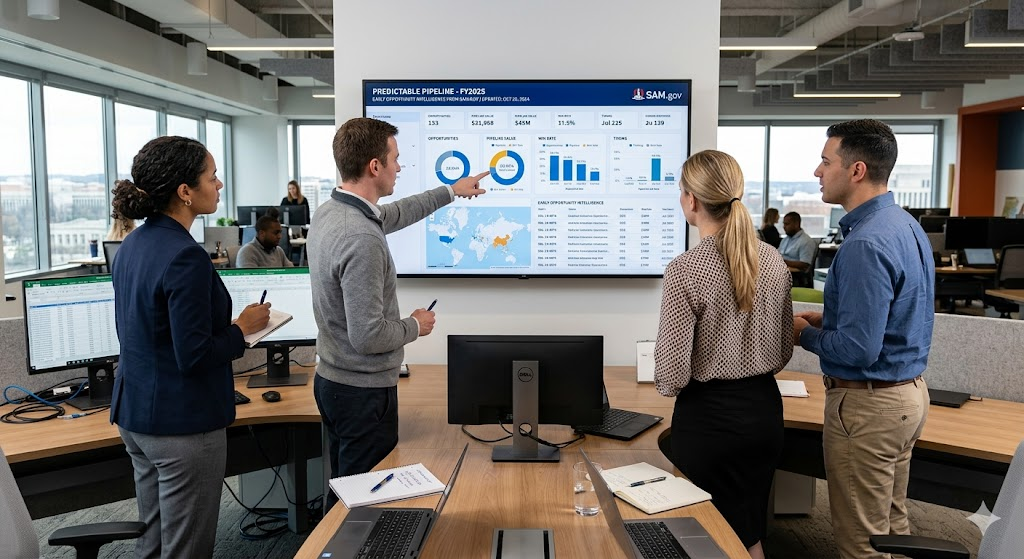
Executive dashboards provide real-time visibility into pipeline health, performance trends, and forecasts. They help leadership make informed decisions based on current data.
A strong dashboard shows key metrics such as pipeline value, win rates, backlog, and opportunity stages. It also highlights risks, such as stalled deals or low-probability opportunities.
With clear visibility, executives can allocate resources more effectively and adjust strategies as needed. This improves forecasting accuracy and keeps the pipeline aligned with business goals.

How Does CaptureExec Help Build a Predictable Pipeline?
CaptureExec is designed specifically for government contractors to manage the full capture lifecycle, from early opportunity identification to contract award. It integrates data from SAM.gov and other sources into one system.
The platform uses AI to analyze past wins and losses, then ranks new opportunities based on winnability. This helps teams focus on deals that match their strengths and improve their overall success rate.
CaptureExec also centralizes key activities such as opportunity search, teaming, budgeting, contract management, and proposal readiness. This eliminates the need for multiple disconnected tools.
Unlike generic CRMs, CaptureExec can be managed by non-technical staff. This reduces dependency on developers and allows teams to adapt quickly as needs change. The result is a more efficient and predictable pipeline.
How Does Early Tracking Improve Competitive Positioning?
Early tracking allows contractors to monitor opportunities from the first signal, such as a sources sought notice. This gives teams more time to prepare and respond strategically.
With early visibility, teams can engage with agencies, understand requirements, and identify potential partners. This positions them ahead of competitors who wait for formal solicitations.
Early tracking also helps identify changes in scope or timing. This ensures teams stay informed and can adjust their approach as needed. Over time, this leads to stronger positioning and higher win rates.
What Supporting Tools and Services Strengthen Pipeline Management?
In addition to core capture platforms, supporting tools and services play an important role in pipeline success. They provide additional layers of intelligence and strategic support.
SAM Gov Tracker helps contractors monitor and track opportunities more effectively. It focuses on early detection, ensuring teams never miss relevant bids.
GovCon Bids consulting services provide guidance on capture and proposal strategy. These services help teams refine their approach, improve messaging, and strengthen their overall positioning.
When combined with a platform like CaptureExec, these tools and services create a complete ecosystem for pipeline management. This integrated approach improves efficiency and results.
What Common Mistakes Should Contractors Avoid?
One common mistake is chasing too many opportunities. This spreads resources thin and reduces the quality of proposals. Focusing on fewer, high-probability deals leads to better outcomes.
Another mistake is ignoring early signals. Waiting for final solicitations limits your ability to shape opportunities and build relationships.
Many teams also rely on disconnected tools. This creates data silos and reduces visibility. A unified system improves coordination and decision-making.
Finally, failing to analyze past performance can hold teams back. Understanding why deals were won or lost is key to improving future results.
FAQ: People Also Ask
How early should you start tracking opportunities on SAM.gov?
You should start tracking opportunities as soon as sources sought or presolicitation notices appear. Early tracking gives you time to plan, build teams, and shape your approach before the final RFP is released.
What is a PWin score in government contracting?
A PWin score estimates the probability of winning a contract based on factors like past performance, competition, and agency fit. It helps teams prioritize opportunities and focus on those with higher chances of success.
Can small businesses benefit from early opportunity intelligence?
Yes, small businesses benefit by identifying set-aside opportunities early and building partnerships. Early insight helps them compete more effectively against larger firms.
Why do many contractors lose despite strong proposals?
Many losses happen because positioning started too late. Without early engagement and planning, even strong proposals may not align fully with agency expectations.
Is SAM.gov enough to manage a pipeline?
SAM.gov provides raw data but lacks tools for prioritization, tracking, and analysis. Most contractors need additional systems to turn this data into actionable insights.
Conclusion
Building a predictable pipeline starts with early opportunity intelligence and a structured approach to qualification and capture. When teams focus on the right opportunities and act early, they improve win rates and reduce wasted effort.
BIT Solutions, LLC helps you achieve this with CaptureExec, an AI-powered platform that brings clarity, structure, and insight to your pipeline. You can identify stronger opportunities, track progress, and improve outcomes with confidence. Contact us today to learn more.